
Imagine leaving Nairobi after breakfast.
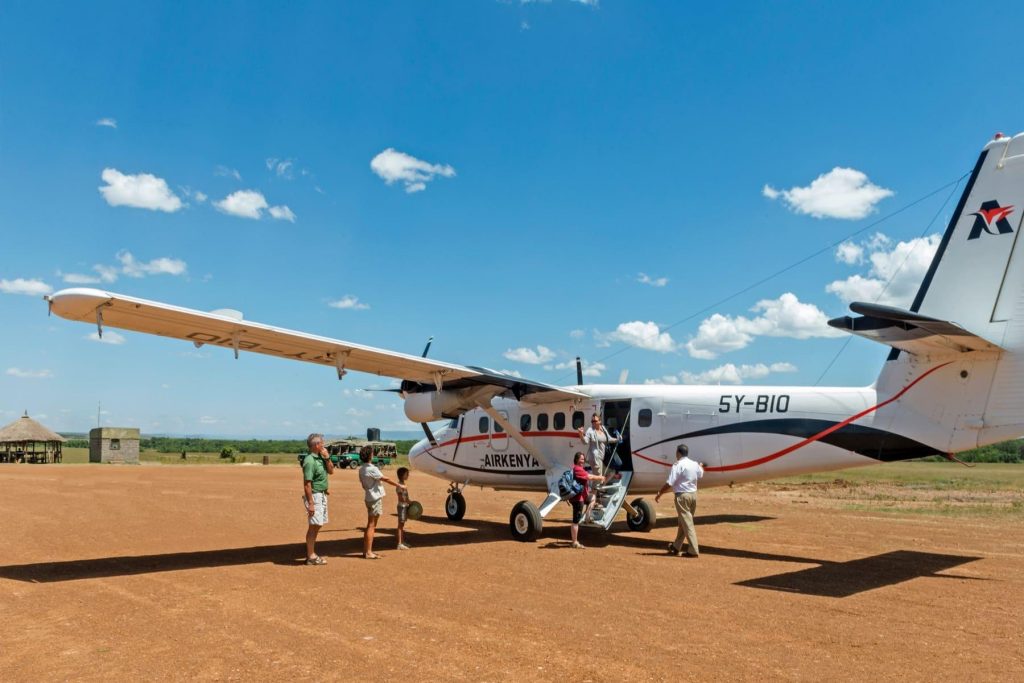
An hour later, you step off a small plane onto a dirt airstrip in the Masai Mara.
Your guide is waiting. And before lunch, you are already watching lions.
That is the promise of a fly-in safari.
Short answer: A Kenya fly-in safari uses scheduled light-aircraft flights from Nairobi’s Wilson Airport to airstrips inside or near the parks. The flight to the Masai Mara takes about an hour, compared with a long drive by road. It saves time and energy, but luggage is limited to around 15 kg per person in a soft bag. It suits travelers with limited time, older guests and anyone combining several regions.
How a Fly-In Safari Works
Most Kenya fly-in safaris start at Wilson Airport, Nairobi’s domestic airport for light aircraft.
From there, scheduled airlines such as Safarilink and AirKenya fly to all-weather airstrips across the country’s main safari areas.
- You check in at Wilson Airport, usually an hour before departure
- The aircraft may stop at more than one airstrip, like a bus route in the sky
- Your guide meets you at your airstrip with your safari vehicle
- Your first game drive often starts on the way to camp
Flights between parks are also possible, so you can move from the Masai Mara to Samburu or Laikipia without returning to Nairobi by road.
Short on time? Read how to make the most of limited safari time in Kenya and Tanzania.
Flying vs Driving: Which Is Better?
There is no single right answer. It depends on your time, your budget and what you want from the journey.
| Fly-in safari | Road safari | |
|---|---|---|
| Time to the Masai Mara | About an hour from Wilson Airport | Most of a day by road |
| Comfort | Short, scenic flights; less time in the vehicle | Longer transfers on mixed roads |
| Luggage | Around 15 kg per person, soft bags only | More flexible |
| Cost | Higher, because of flights | Lower |
| Best for | Short trips, multi-region safaris, older travelers | Longer trips, families on a budget, road scenery |
Many of our guests choose a mix: they drive one leg to see the countryside, then fly the longer distances.

The Best Fly-In Safari Routes in Kenya
Masai Mara
The classic. Several airstrips across the reserve and the private conservancies mean you land close to your camp. A short stay of three nights works well by air. See our 3-day Masai Mara fly-in luxury safari.
Amboseli, Samburu and the Mara
Three very different landscapes: elephants under Kilimanjaro, the dry north with its special species, and the big-cat plains of the Mara. By road, this route is long. By air, it flows. See our 7-day Kenya fly-in safari.
Laikipia and the private conservancies
Laikipia’s conservancies, including Ol Pejeta, are a short flight from Nairobi and pair perfectly with the Mara. For the ultimate version, combine helicopter and light-aircraft flights on our 7-day Kenya helicopter and fly-in conservancy safari.
Bush to beach
Some flight routes connect the safari areas with the Kenyan coast and Zanzibar, so you can end your safari on the beach without a long transfer. We confirm the current schedule when we plan your trip.
A Day on a Fly-In Safari
Here is what a typical travel day looks like.
Morning: a final early game drive from your first camp, then breakfast.
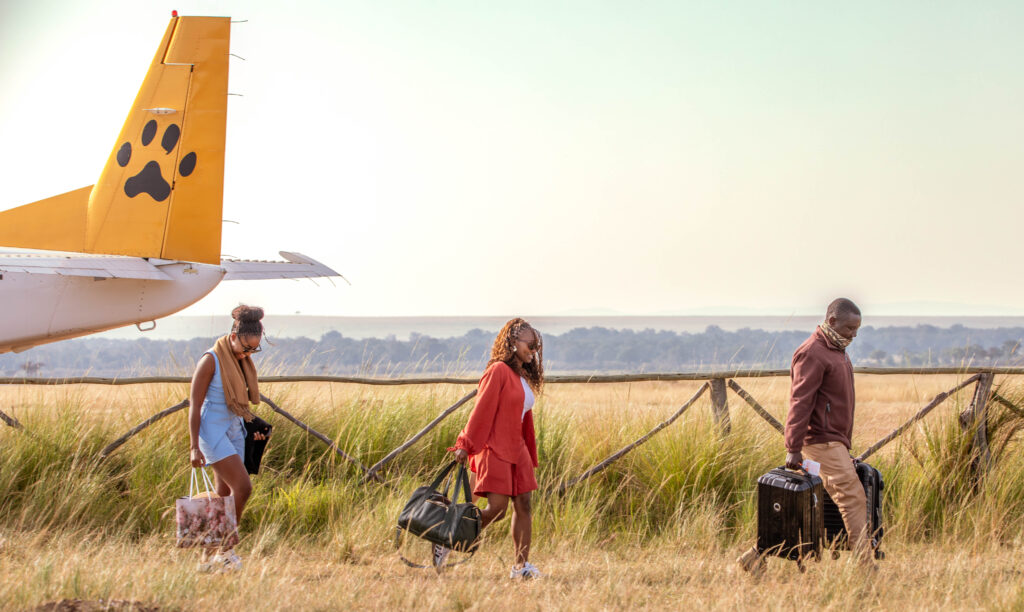
Late morning: your guide drives you to the airstrip. The plane lands, a few guests step off, and you board.
Midday: a short, scenic flight with views of plains, rivers and escarpments.
Afternoon: your new guide meets you at the next airstrip, often with a game drive on the way to camp.
Evening: sundowners in a completely new landscape.
Instead of losing a day to the road, you gain an extra afternoon of safari.
What Affects the Cost of a Fly-In Safari
Flying adds to the cost of a safari, but how much depends on a few simple factors.
- Number of flight legs: each flight between airstrips is priced separately.
- Season: fares and camp rates are higher in peak months.
- Scheduled vs private charter: scheduled flights cost less; a private charter gives you your own plane and timing.
- Your camps: camps in remote conservancies are often only practical by air.
For a full breakdown of safari pricing, see how much a luxury safari costs in Kenya, Tanzania and Rwanda.
Luggage Rules on Bush Flights
This is the one rule that catches people out.
Light aircraft have small cargo holds, so airlines usually allow around 15 kg per person, in soft-sided bags, including hand luggage and camera gear. AirKenya publishes the details in its baggage policy.
- Use a soft duffel bag, not a hard suitcase
- Weigh your bag before you leave home
- Store extra luggage in Nairobi: we can arrange it for you
Our full luxury safari packing list shows exactly what fits.
Is a Fly-In Safari Safe?
Kenya’s scheduled safari airlines operate daily flights to the parks, and the airstrips are a normal part of safari life.
Flights can be bumpy in the afternoon heat, and schedules can shift with the weather, so we build a little flexibility into every fly-in itinerary.
If you are nervous about small planes, tell us. We can keep flights short or mix in road transfers.
Kenya Fly-In Safari FAQs
How long is the flight from Nairobi to the Masai Mara?
About an hour from Wilson Airport, depending on how many airstrips the flight stops at before yours.
What is the luggage limit on a fly-in safari?
Usually around 15 kg per person in a soft-sided bag, including hand luggage and camera equipment. Check your airline’s current policy before you fly.
Is a fly-in safari worth the extra cost?
If your time is limited or you want to combine several regions, yes. You gain hours of game viewing and avoid long drives.
Can I combine flying and driving?
Yes. Many guests drive one leg and fly the longer distances, which balances cost, comfort and scenery.
Which airport do fly-in safaris leave from?
Most leave from Wilson Airport in Nairobi, which handles light aircraft. International flights arrive at Jomo Kenyatta International Airport, so allow time for the transfer.
Plan Your Fly-In Safari
A fly-in safari gives you the one thing money can’t usually buy on a holiday: more time.
Talk to our Kenya safari specialists and we will design a fly-in itinerary around your dates, your camps and the wildlife you most want to see.