
Here’s the secret most first-time travelers learn too late:
A luxury safari is not about packing more.
It’s about packing right.
Your camp will take care of the comfort. Your job is to arrive light, layered and ready for early mornings, dusty tracks and golden evenings.
Short answer: For a luxury safari in Kenya or Tanzania, pack a soft duffel bag of around 15 kg, neutral-colored layers for cold mornings and warm afternoons, a warm fleece, a wide-brimmed hat, sunscreen, insect repellent, binoculars and a camera with a zoom lens. Most luxury camps offer laundry, so a few versatile outfits are enough.
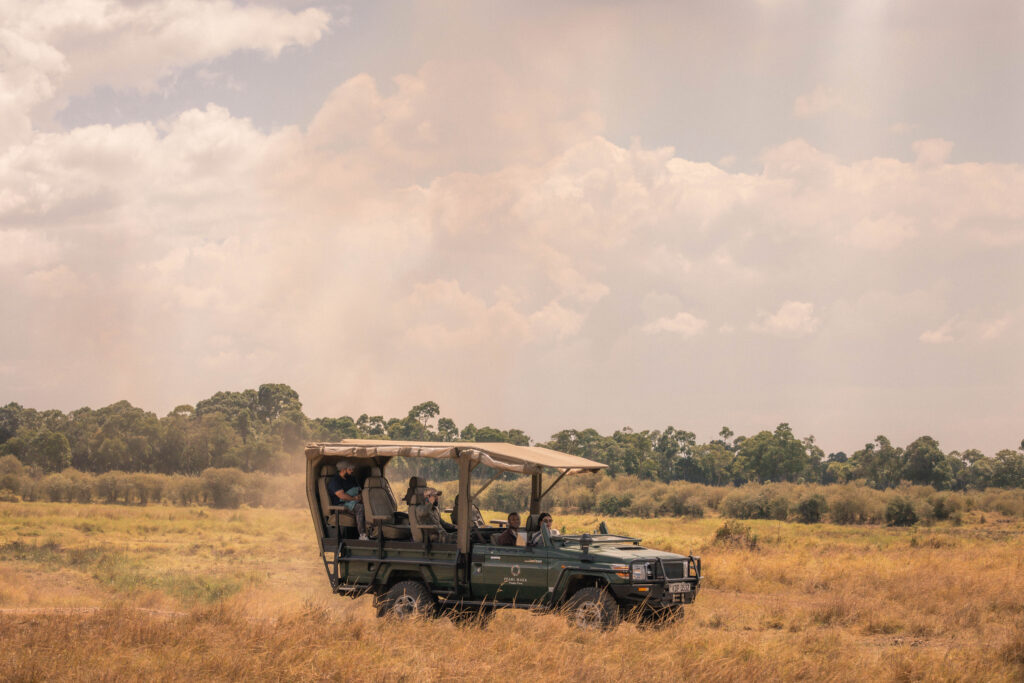
Start With the Bag: Why Soft Duffels Matter
If your safari includes light-aircraft flights between parks, your bag choice is not optional.
Scheduled bush flights in Kenya usually allow around 15 kg per person, in soft-sided bags, and that limit includes hand luggage and camera gear. AirKenya’s published baggage policy is a good example of the rules you can expect.
Hard suitcases and bags with rigid frames often cannot be loaded into the small cargo pods of these aircraft.
- Use a soft duffel bag without wheels or a rigid frame
- Keep camera gear and essentials in a small daypack
- Leave extra luggage in Nairobi: we can arrange secure storage until you return
Planning a fly-in safari? See our 3-day Masai Mara fly-in luxury safari
Safari Clothing: Layers, Not Volume
Safari days have two moods.
Early mornings in an open vehicle can feel cold, especially in the highlands of Laikipia or on the crater rim at Ngorongoro.
By midday, it is warm and bright.
So think in layers:
- 3 to 4 lightweight shirts, including long-sleeved ones for sun and insect protection
- 2 pairs of comfortable trousers and 1 pair of shorts
- 1 warm fleece or light down jacket for early drives and evenings around the fire
- 1 light rain jacket for the green seasons
- Comfortable closed shoes or light walking boots, plus sandals for camp
- Swimwear: many luxury camps and lodges have pools
- One smart-casual outfit for dinner, if you like
Which colors to wear on safari
Choose neutral colors: khaki, olive, beige, tan and soft greens.
They blend into the landscape and show less dust. Avoid dark blue and black in areas with tsetse flies, as both colors attract them, and leave bright white for the evenings.
Sun, Insects and Health
The equatorial sun is strong, even when it feels cool.
- A wide-brimmed hat and sunglasses
- High-SPF sunscreen and lip balm
- Insect repellent with DEET or picaridin
- Any prescription medicines, in their original packaging
- A small personal kit: pain relief, antihistamines, rehydration salts and plasters
Speak to a travel health clinic about malaria prevention and recommended vaccinations before you go, and check entry health requirements for every country on your route.
Questions about safety? Is it safe to go on safari in East Africa?
Camera Gear and Binoculars
This is where you should not cut corners.
Wildlife is often closer than you expect, but the best moments still happen at a distance.
- Binoculars: one pair per person, ideally 8×42 or 10×42. Sharing a single pair on a game drive means missing sightings.
- Camera: a zoom lens in the 100 to 400 mm range covers most situations. A good bridge camera is a lighter alternative.
- Power: spare batteries and memory cards. Many camps charge devices in the main area or in your tent.
- Dust protection: a soft cloth or a simple camera cover for dusty drives.
Kenya uses UK-style three-pin (Type G) sockets, and Tanzania commonly uses Type G and Type D, so bring a universal adapter.
Documents and Money
- Passport with blank pages and enough validity for your whole trip
- Visa or travel authorization for each country you visit
- Printed and digital copies of your travel insurance and itinerary
- Credit card and some US dollars in small notes for tips and personal purchases
- Your emergency contacts and your safari specialist’s details
For a full checklist before you book, read our guide on everything you need to know before booking an African safari.
What You Do Not Need to Pack
Luxury camps take care of more than most guests expect.
- Hair dryers, toiletries and bathrobes are usually provided
- Laundry is offered by many camps, often included in your stay
- Drinking water is provided throughout your safari
- Plastic carrier bags: Kenya and Tanzania have banned single-use plastic bags, so use packing cubes or fabric pouches instead
Packing by Season
| When you travel | Pack a little extra |
|---|---|
| June to October (dry season) | Warm layers for cold mornings, a buff or scarf for dust |
| November to early December, March to May (green seasons) | A light rain jacket and quick-dry clothing |
| January to February (short dry season) | Extra sun protection for warm, bright days |
Not sure when to travel? See the best time to visit Kenya and Tanzania.
Your 7-Night Safari Packing Checklist
Print this, tick it off, and you are done.
| Category | What to pack |
|---|---|
| Bag | 1 soft duffel (around 15 kg for bush flights) and 1 small daypack |
| Tops | 3 to 4 shirts, at least 2 long-sleeved, in neutral colors |
| Bottoms | 2 pairs of trousers, 1 pair of shorts |
| Warm layer | 1 fleece or light down jacket |
| Rain | 1 light, packable rain jacket |
| Footwear | Closed walking shoes or light boots, plus camp sandals |
| Evening and pool | Swimwear and 1 smart-casual outfit |
| Sun | Wide-brimmed hat, sunglasses, sunscreen, lip balm |
| Insects and health | Repellent, personal medicines, small first-aid kit |
| Optics | Binoculars for every traveler, camera with zoom lens, spare batteries and cards |
| Tech | Universal adapter, power bank, charging cables |
| Documents | Passport, travel authorizations, insurance, itinerary, some US dollars in small notes |
Packing for children and older travelers
Families should add a warm hat for early drives, child-safe sunscreen and a few quiet games for the downtime between drives.
Older travelers often appreciate a small cushion for longer drives, any mobility aids they normally use, and spare reading glasses. Tell us about any needs and we will plan vehicles and camps around them.
Safari Packing FAQs
How much luggage can I bring on a safari?
On light-aircraft flights between parks, plan for around 15 kg per person in a soft bag, including hand luggage. On road safaris, limits are more relaxed, but a soft bag is still easiest.
What should I wear on a safari game drive?
Neutral-colored, breathable layers: a long-sleeved shirt, comfortable trousers, a fleece for the early morning, a hat and closed shoes.
Do I need hiking boots for a safari?
Not usually. Comfortable closed shoes or light walking boots are enough, unless you plan a walking safari or a trek.
Can I wear dark colors on safari?
It is best to avoid dark blue and black in areas with tsetse flies, as these colors attract them. Neutral tones are the safest choice.
Is laundry available on a luxury safari?
Many luxury camps and lodges offer laundry, often included in your stay, so you can pack fewer clothes.
Travel Light, Experience More
The less you carry, the more present you are.
Pack right, and the only thing you will think about is the next sighting.
Speak to our safari specialists and we will send you a personalized packing list with your private safari itinerary.